Una National Park
Una National Park
Turquoise river, travertine waterfalls and wild gorges: Una National Park, at the gates of Bihać, is one of the best-preserved natural spaces in the western Balkans.
Una National Park stretches around the Una River and its tributary the Unac, in northwestern Bosnia and Herzegovina, in the immediate vicinity of Bihać. Classified as a national park in 2008, it protects a network of waterfalls, rapids and limestone gorges of rare ecological integrity. The Una River — whose Latin name means "unique" — fully justifies this reputation through the turquoise clarity of its waters and the diversity of its falls.
Quick reference information
- Entrance : fee-based (national park access fee)
- Access : by car from Bihać, road towards Kulen Vakuf and Martin Brod
- Suggested duration : a full day minimum; two days to cover the main sites
- Attire : hiking shoes recommended on wet and rocky trails
- Regulated activities : fishing subject to permit, camping only in authorized zones
What you'll see
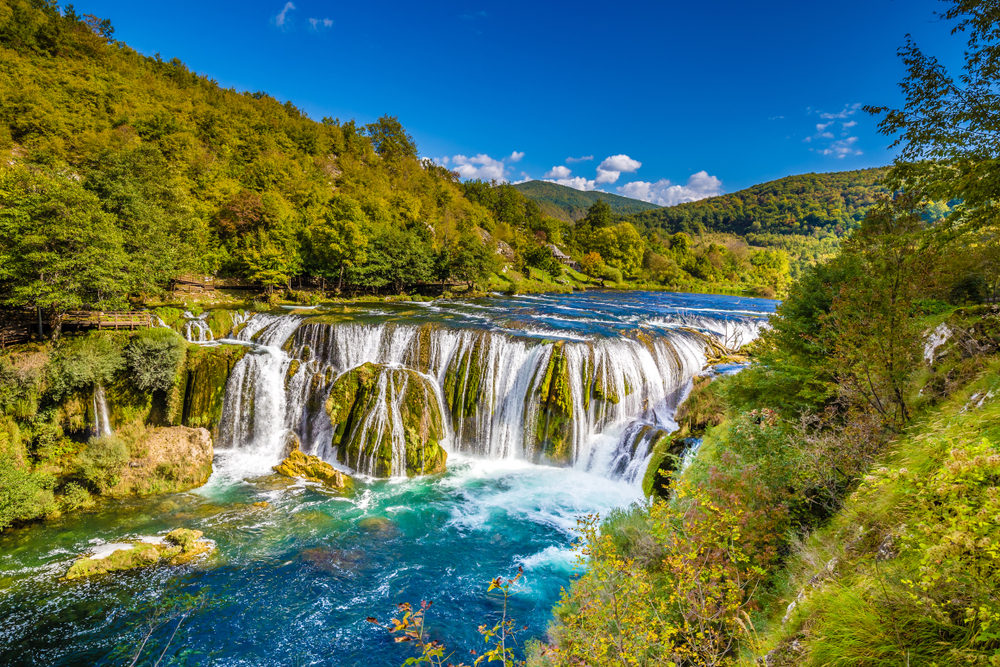
The park concentrates several major waterfalls. The Štrbački Buk falls, located near Martin Brod, form a curtain of water over 20 meters wide on a travertine backdrop. The Una's Kravica falls (not to be confused with those of Kravice in Herzegovina) and the Lohovo rapids complete the picture. The vegetation blends beech, oak and fir forests, habitat for otters, brown trout and diverse birdlife.
History and context
The Una valley has been inhabited since antiquity; Illyrian and Roman remains have been identified in the region. In the Middle Ages, the city of Bihać was an important political center of the Bosnian kingdom. The Martin Brod site preserves the ruins of a 16th-century Franciscan monastery, testament to the Catholic presence before the Ottoman conquest. The national park status, obtained in 2008, ended several decades of pressure on natural resources.
Highlights of your visit
Štrbački Buk
This is the park's iconic waterfall. Wide and not particularly high, it cascades down in several streams over natural travertine dams. An established trail runs along the bank and allows you to approach the falls as closely as possible. The water's color ranges from emerald green to blue depending on the light.
Martin Brod and the Unac falls
At the confluence of the Una and Unac rivers, Martin Brod offers a collection of small waterfalls framed by medieval ruins. The village is a starting point for kayaking and rafting excursions on the rapids downstream.
Rafting and kayaking
The Una River is renowned for its rafting courses, accessible at different levels. The sections between Lohovo and Bihać suit beginners; the gorges further upstream require experience. Local operators offer guided trips from Bihać.
Hiking and wildlife observation
The trail network crosses through little-visited forests. The European otter is present on the Una, as is the kingfisher. River trout, a species protected within the park, is visible in the clear waters of calm areas.
Photography tips
Morning light is ideal at Štrbački Buk: the sun illuminates the falls face-on and brings out the turquoise of the water. A polarizing filter reduces surface reflections. In summer, dense vegetation creates contrasting shadow zones; prefer slightly overcast days for diffuse, even light. Wildlife photography (otters, kingfishers) requires patience and a long lens on calm banks early in the morning.
Location and access
Una National Park is accessible from Bihać, the main city of Una-Sana canton, served by the national road connecting Zagreb (Croatia) to the rest of Bosnia. The Croatian border is nearby, making it a natural stop on a western Balkans circuit. The park's main entrance and the Štrbački Buk site are about thirty kilometers south of Bihać, heading towards Martin Brod. No direct rail connection serves the park interior; a car or rental vehicle remains the most practical means of transportation.
Nearby attractions
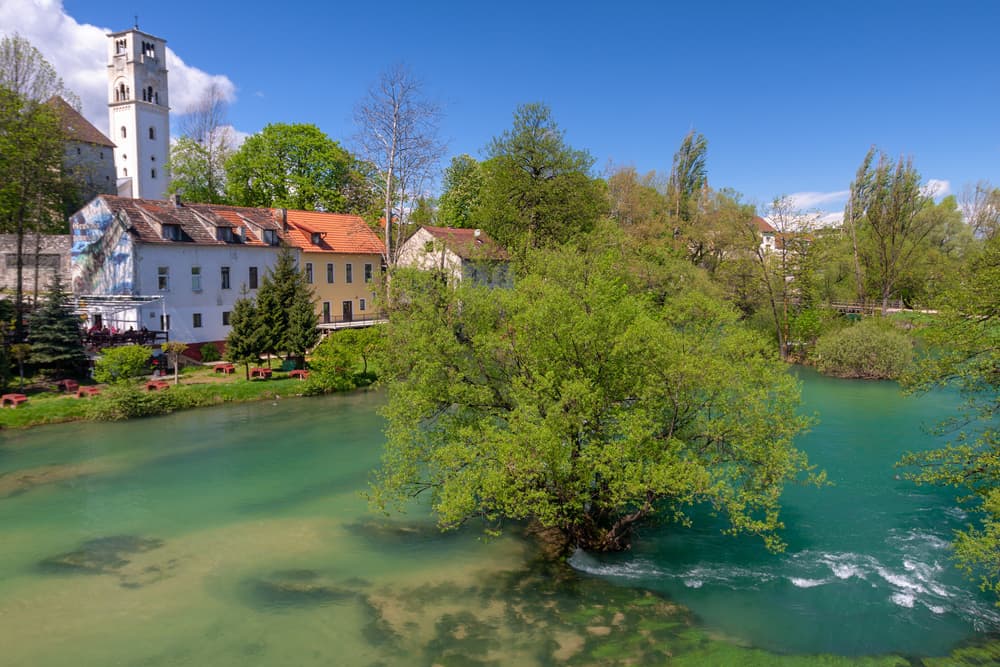
- Bihać Old Town — the Fethija tower (a former Gothic church converted into a mosque) and the Una's banks in town deserve half a day.
- Pliva Lakes and Jajce Falls — to the east, Jajce and its urban cascades make a classic stop on the way to Sarajevo.
- Plitvice Lakes (Croatia) — across the border, this Croatian national park shares the same travertine geology and can be combined into a circuit.
Frequently asked questions
Spring (April-June) offers high water flow that makes the waterfalls spectacular. Summer is peak season for rafting. Autumn colors the forests and reduces crowds. Winter can make certain trails slippery and close secondary accesses.
Swimming is possible in certain areas outside protected sectors. Within the park, check with rangers about authorized zones, as some areas are reserved for aquatic wildlife.
Yes, for sections downstream near Bihać. The wilder gorges further upstream are reserved for experienced practitioners. Local operators offer adapted levels and provide equipment.
EU citizens enter with a valid ID card. Bosnia and Herzegovina is not part of the Schengen area; check entry conditions based on your nationality before departure.
Yes. The two parks are geographically close and share similar geology. A two to three-day circuit allows you to visit both sites while crossing the Croatian-Bosnian border.
Guesthouses and small hotels exist in Martin Brod and nearby villages. Bihać offers a wider range of accommodations for those who prefer an urban base.
Interested in this visit?
We can include it in your personalised itinerary.