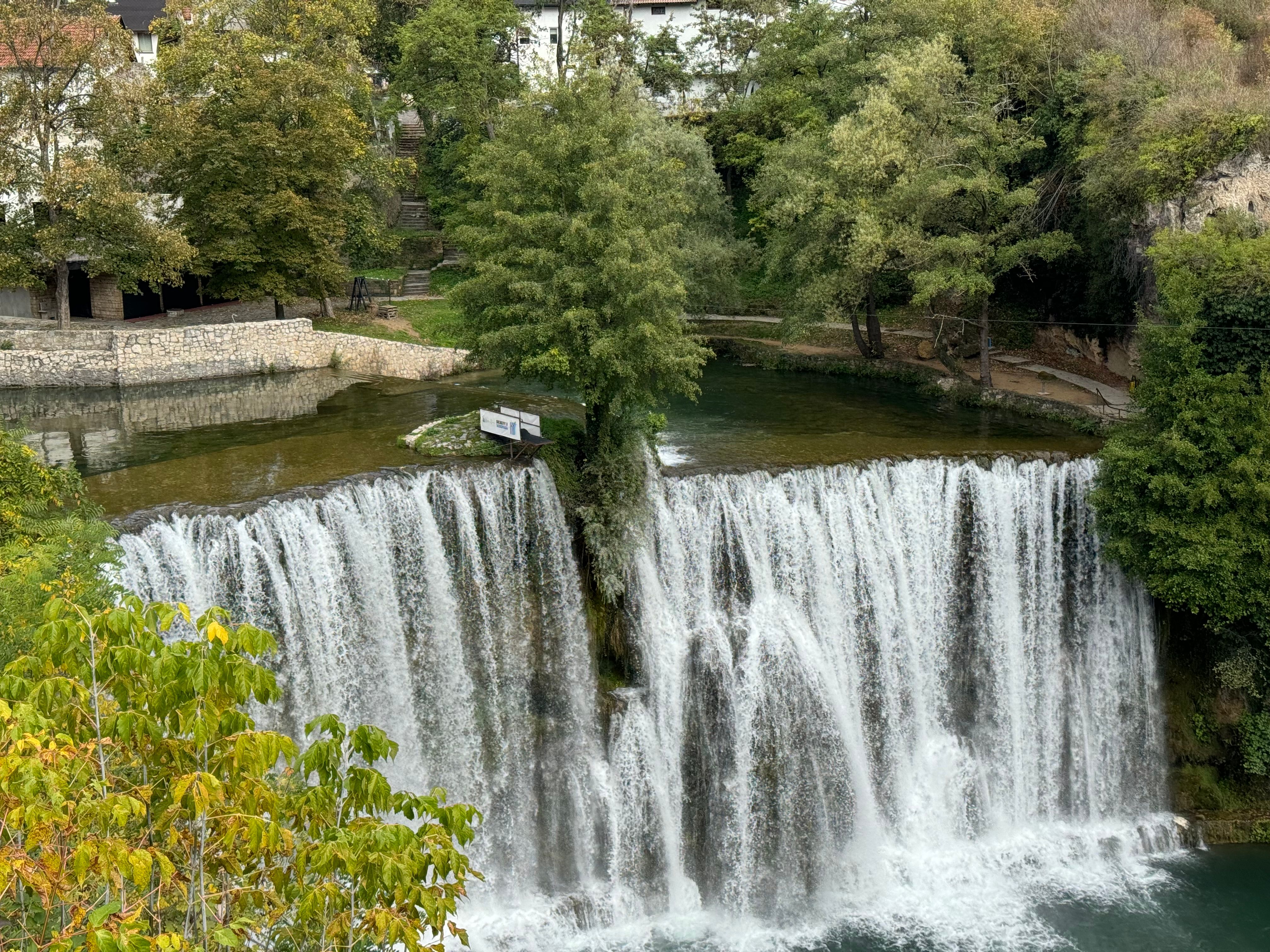
Visoko
Once the capital of medieval Bosnia, Visoko is known for Visočica fortress and the international debate surrounding Bosnia's pyramids. Located 30 km from Sarajevo.
Visoko is a city in Bosnia-Herzegovina situated in the Bosna valley, roughly thirty kilometres northwest of Sarajevo. It is known for its medieval past — capital of the Bosnian kingdom in the 15th century — and for the international controversy sparked in 2005 around the supposed "pyramids of Bosnia," hills whose geometric form sparked global debate between archaeologists and proponents of alternative theories.
Practical Information at a Glance
- Access from Sarajevo: approximately 30 km by road; regular buses from Sarajevo's central bus station.
- Recommended duration: a half-day to a full day depending on the sites visited.
- Attire: hiking shoes recommended for trails around the hills.
What You'll Find There
Visoko offers two layered narratives: the medieval city and the pyramid phenomenon. The Visočica site, a hill overlooking the town, holds the ruins of the medieval Visoki fortress, once the residence of Bosnian kings. Below, the old town retains traces of its Ottoman past.
Since 2005, the Bosnian Pyramid of the Sun foundation has opened underground tunnels — the Ravne network — to visitors. These galleries, presented as artificial by their promoters, are disputed by the international archaeological community, which views them as natural formations and recent excavation work.
History and Context
In the 15th century, Visoko is the political centre of the medieval Bosnian kingdom. Visoki fortress, perched atop the Visočica hill, serves as the royal residence until the Ottoman conquest of 1463. The town later maintains a commercial role under Ottoman rule, notably in leather working.
In 2005, entrepreneur Semir Osmanagić announces the discovery of human-made pyramids beneath surrounding hills. The story generates worldwide media coverage and an influx of tourists, despite near-universal rejection of the thesis by professional archaeologists. The debate remains spirited.
Highlights of Your Visit
Visoki Fortress
The ruins of the medieval fortress crown Visočica hill. The panorama across the Bosna valley and surrounding hills is worth the climb alone. This is where the last Bosnian kings held court before the Ottoman conquest.
The Ravne Tunnels
The Ravne underground gallery network is the primary tourist attraction promoted by the local foundation. Regardless of one's stance on their origins, exploring the tunnels is an unusual experience. Explanatory panels present the promoters' theory; visitors draw their own conclusions.
The Old Bazaar and Leather Craft
Visoko has long been renowned for traditional leather manufacturing. Several workshops and shops in the city centre perpetuate this craft, notably the production of opanci (traditional sandals) and worked leather goods.
Photography Tips
The summit of Visočica offers favourable light in late afternoon, with the Bosna valley spread below. Inside the Ravne tunnels, artificial lighting is dim: a tripod or a camera with strong low-light performance is useful. The fortress ruins photograph well in the raking light of early morning.
Location and Access
Visoko is located in the Zenica-Doboj canton, approximately 30 km northwest of Sarajevo by main road. Regular buses connect Sarajevo's central bus station to Visoko. The town is also accessible by car from Sarajevo in less than an hour depending on traffic. The town centre is flat and accessible; the climb to Visočica fortress requires moderate physical effort on an unmaintained trail.
Nearby
- Sarajevo — capital of Bosnia-Herzegovina, about thirty kilometres away: Ottoman old town, Baščaršija market, sites from the 1992-1995 war.
- Kakanj — neighbouring industrial city, departure point for some Franciscan monasteries in the region.
- Zenica — major city in the Bosna valley, approximately 40 km north, with its regional museum.
Frequently asked questions
No. The vast majority of professional archaeologists and geologists consider the Visoko hills to be natural formations. The human-made pyramid thesis is rejected by the international scientific community, even though the site attracts many curious visitors each year.
Yes, the Ravne tunnels are open to visitors and managed by the Bosnian Pyramid of the Sun foundation. An entrance fee is required. Bring warm clothing: the temperature inside remains cool year-round.
Buses depart regularly from Sarajevo's central bus station to Visoko. The journey takes approximately 45 minutes to an hour. By car, allow a similar duration depending on traffic on the main road.
Spring and autumn offer pleasant temperatures for hiking to Visočica fortress. Summer is warm but manageable. In winter, trails to the ruins can be slippery.
Yes, the proximity to Sarajevo (approximately 30 km) allows for a day trip. Leave in the morning to have time to explore the fortress and tunnels before returning in the evening.
Interested in this visit?
We can include it in your personalised itinerary.